Mono No Aware and the Tintype
物の哀れ
We spent some time in Japan earlier this summer. I tried to avoid the heavier tourist areas when I could, and what stayed with me wasn't any one place. It was the way of noticing. There's an attention to the present moment there that I've been chewing on ever since.
The Japanese have a concept called mono no aware (物の哀れ). The literal translation is something like "the pathos of things," but the version that stuck with me is about moments: the quiet awareness that a moment is precious because it does not last. Cherry blossoms are the famous example. Part of their beauty is that they're already falling. People have been circling this phrase for centuries trying to pin it down.
I think about that often in the darkroom.
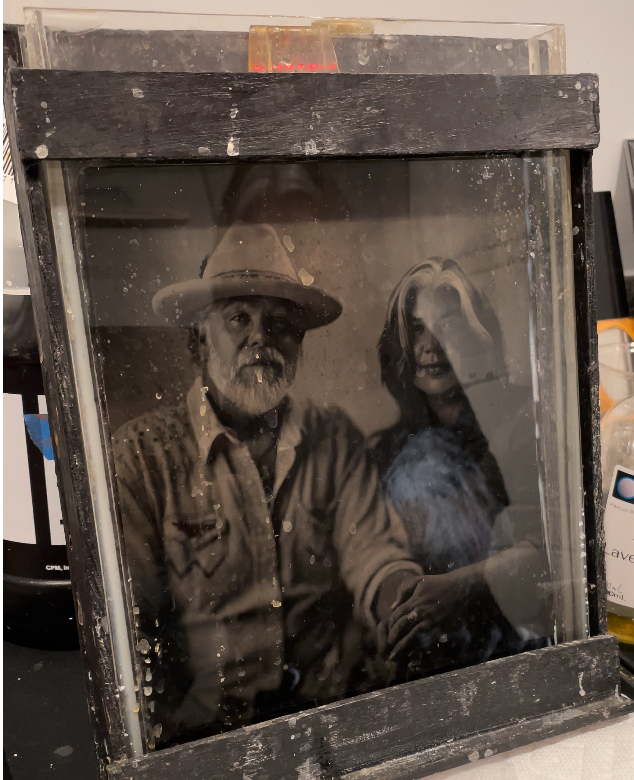
The making of a plate is itself a fleeting event. The collodion is only sensitive while it's wet, so the clock starts the moment it hits the plate. The sitter becomes still. The light falls across their face. Then the image arrives in two acts. The first is in the developer tray, under the safelight: shadows first, then a face, coming up out of nothing. The second act is the one nobody is ready for. The lights come on, the plate slips into the fixer looking milky and reversed, a ghost of the person standing right there, and then it clears. In a few seconds, what looked like a negative becomes the portrait itself. I've heard people gasp. I've heard people go completely silent. Both are correct.
That moment is singular. It cannot be repeated in exactly the same way. Not by me, not by the same sitter, not with the same plate. The pour is different, the humidity is different, the silver bath is a day older, the light changes.
If you've sat for a session, you know the part I mean. Everyone crowds around the tank and goes quiet, watching the same small thing. I've made thousands of plates and I still haven't gotten tired of watching people watch that.
And yet, from that passing moment, something lasting is made. The finished plate remains, not only as a photograph, but as a witness to the event itself. It stood in the presence of that person, that light, that silence, that small act of transformation. It isn't a picture of the moment so much as an object that was there for it. There's no negative and no second one. The plate in your hand is the plate that sat inside the camera.
That's the part I keep coming back to. A tintype holds two truths at once. The beauty of the moment is fleeting, but the witness remains.
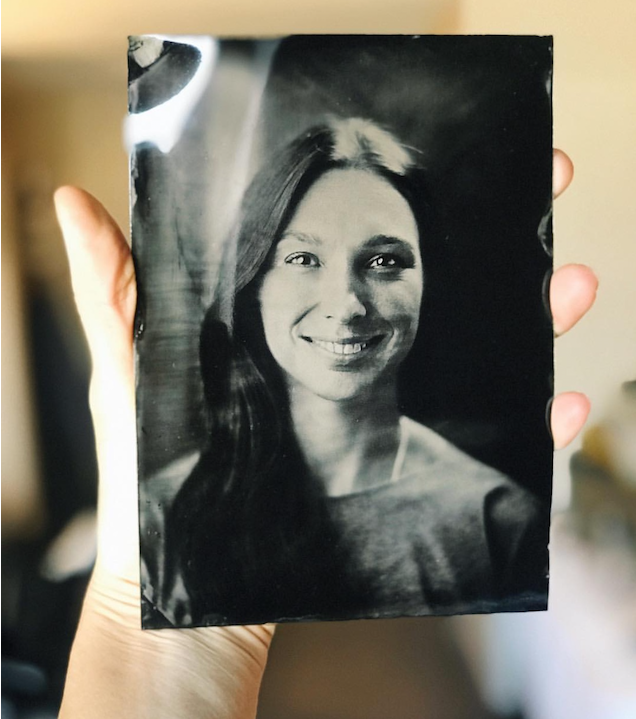
I think this is why tintype sessions feel different from other kinds of photography, and why people go quiet when they hold their plate for the first time. Digital photography treats moments as infinitely repeatable. Take two hundred frames, pick one, the rest evaporate. Wet plate treats a moment the way mono no aware does: as something that happens once, deserves your full attention, and then is gone. What you keep is not the moment. What you keep is the thing that witnessed it.
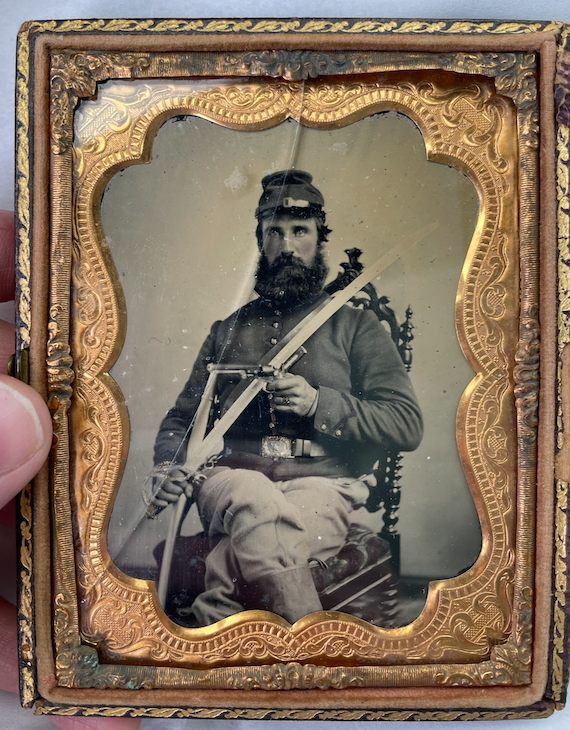
Photography learned this early. Civil War soldiers sat for tintypes before shipping out, and the plates went home in pockets and envelopes. Witnesses, left behind on purpose. The men are gone, the rooms are gone, the world they stood in is gone. The plates are still here, a hundred and seventy years later, still saying he was here.
I don't know a better argument for slowing down.
If you'd like to sit for a plate of your own, sessions are here. Fair warning: I will make you stand very still, and it will be over before you want it to be. That's rather the point.
About Blake Wylie
Blake Wylie is a contemporary tintype photographer and wet plate collodion artist. He has been creating tintypes and ambrotypes with the wet plate collodion process since 2011. Based in Franklin, Tennessee, near Nashville, his work spans handmade portraiture, fine-art projects, musician collaborations, and commercial commissions on metal and glass. He writes about tintype and early photographic processes from firsthand studio and on-location experience. His work has been featured by PBS Tennessee Crossroads, PetaPixel, Fstoppers, and other outlets.